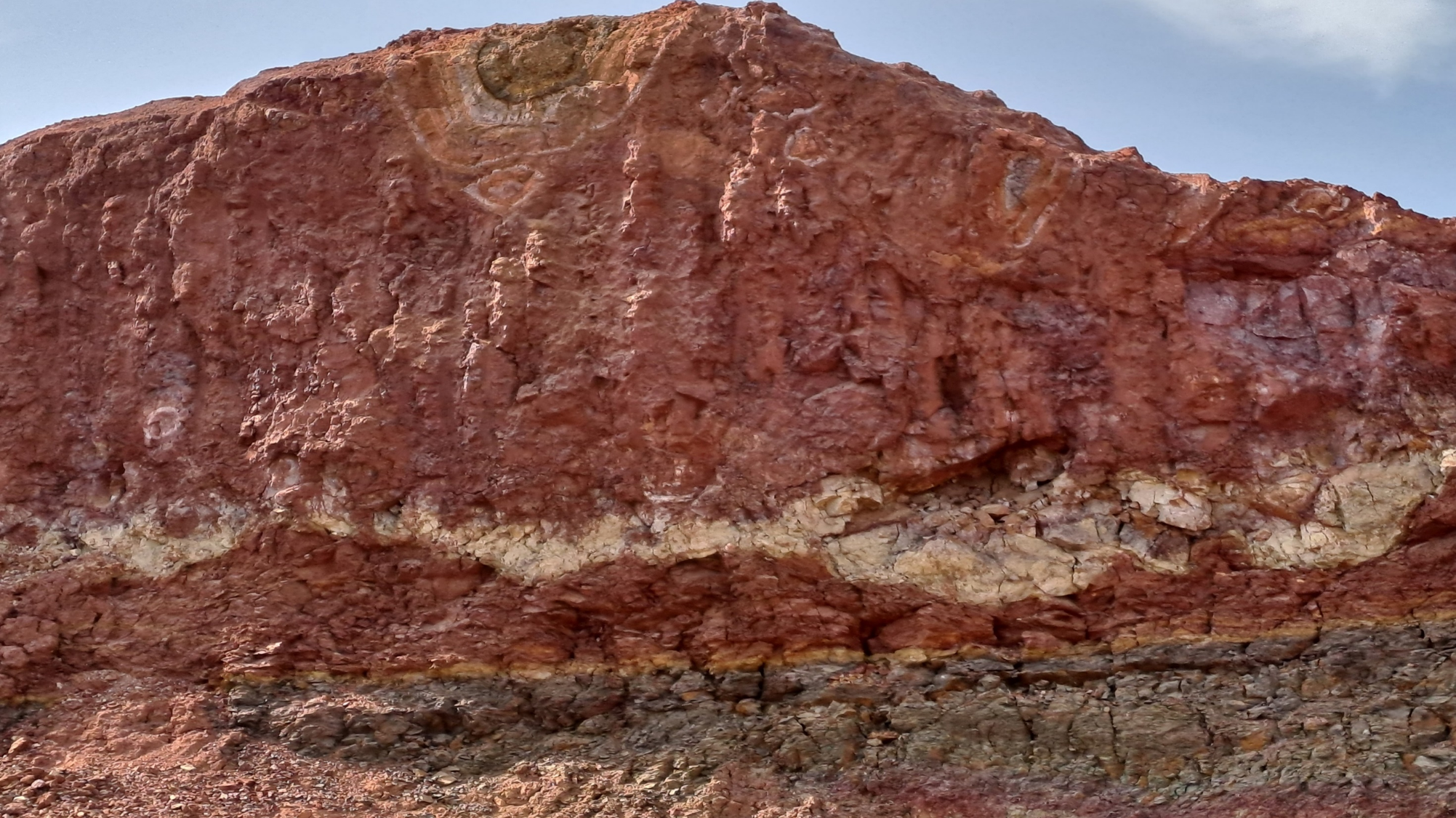
Clay minerals for futuristic technology
Clay minerals, a naturally occurring abundant low-cost nano-geomaterials with their stable thermal, mechanical, fire resistance and versatile physicochemical characteristics make them widely useful since ancient time of human civilization. Clay minerals are naturally occurring layered fine particle (less than 2 μm) with 1:1, and 2:1 and mixed type structural varieties having specific physiochemical characteristics with versatile properties1. The wide use of clay minerals is mainly due to their high adsorption capacity and specific surface area, ion exchange capacity, colloid and thixotropy, chemical inertness swelling property, and, above all, low toxicity for oral administration.
Functional modification of natural clay and synthesis of clay-nanocomposites
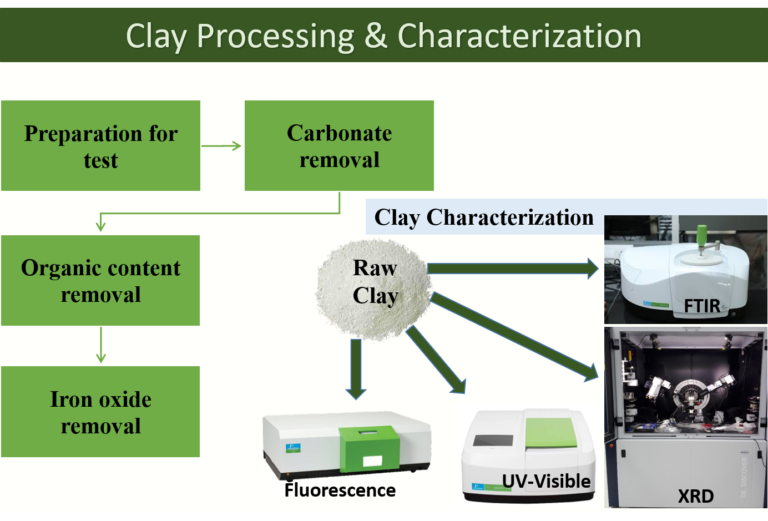
Clay minerals possess wide structural variation with 1D, 2D and other types having form of nanotube, layered-type and ribbon-type with tunnel and channel possessing variable pore sizes and surface properties. Surface modifications and functionalization of clay minerals have received great attention because it allows the creation of new materials and new applications. This “second (technological) life” of clays into fields of emerging interest in every sphere of human sustenance is mainly due to their peculiar and effective characteristics and properties with variable surface area and reactivity, and their biocompatibility. Organically and inorganically modified clay minerals have become essential for development of advanced customized nanocomposites. Modified clays are used in other applications such as adsorbents of organic pollutants in soil, water and air; rheological control agents; paints; cosmetics; refractory varnish; thixotropic fluids, etc.
Field of Application
Due to the robust mechanical properties and high chemical and thermal stability natural clays have been widely used in the fields of liquid fertilizers, thickeners, stabilizers, drilling mud, fillers and food packaging. Moreover, natural clays have moderate to high specific surface area for which cay can be used as crucial materials in the fields of energy and environmental fields, such as absorbents and energy storage and conversion systems. Recent research works have been conducted about modified clays in the fields of energy storage systems, primarily with the focus on batteries (anodes, cathodes, separators, electrolytes), supercapacitors, solar cells, and fuel cells etc.
The goal of developing advance nanomaterials with the use of environmentally friendly geomaterials, clay minerals are emerging candidates for their versatile physio-chemical properties, bio- and eco-compatibility, low cost and abundant natural availability. Scientific and engineering field of emerging interest where clays can be exploited in the field of energetic and electronic applications, environmental clean-up processes, biomedicine, membrane technologies, composite materials, sol-gel technology, 3D printing, and in developing traditional ceramics. Therefore, the valorization of clay minerals follows the principles based on the circular economy, and, could play a major role in the green chemistry-driven technological revolution.
The use of natural clay as well as modification, functionalization and clay-nano-composite synthesis makes it an exponentially growing field with varied application. The exploitation of clays guarantees a twofold advantage in terms of economic sustainability (low-cost raw materials) and environmental safety, coupled with their abundant availability for developing advanced nano-geomaterials for energy, environment and bio-medical application.
For different applications, GSES with their expertise and knowledge would adopt suitable modification methods to realize the greatest advantages from clays in different field of application for future sustainability.
References
1Inorganics 2022, 10, 40. https://doi.org/10.3390/inorganics10030040.
2Adv. Sci. 2021, 8, 2004036. https://doi:10.1002/advs.202004036.